
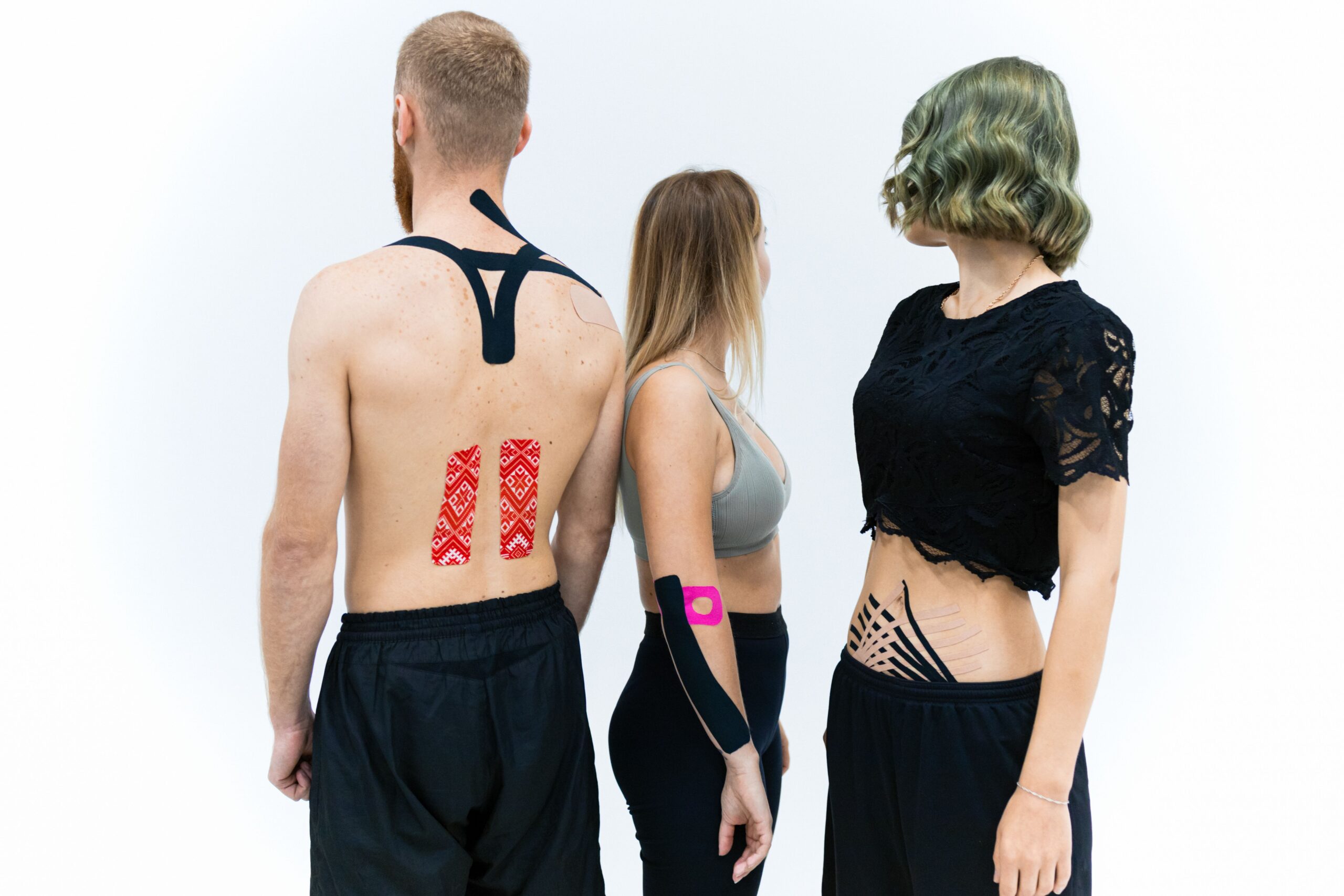
Kinesio Tape: Everything You Need to Know
You have probably seen the brightly coloured strips of tape on athletes, runners & even people walking around the gym or your offices. But what does kinesiology tape actually do & is it more than just a colourful accessory?
Kinesiology tape, often called kinesio tape or k-tape, is an elastic therapeutic tape that can be applied to the skin to provide sensory feedback & support.
It is commonly used for sports injuries, muscle & joint problems & during rehab. One of the most important things to understand is that the tape itself is not a cure. Its usefulness depends on why it is being applied, how it is applied & what else is being done to address the underlying problem.
What does kinesio tape actually do?
Kinesiology tape is designed to stretch & move with the body, unlike traditional rigid sports tape.
When applied by a trained physiotherapist, the tape can provide additional sensory input to the skin & may influence how you perceive movement or discomfort. For some patients, this can make a movement feel more comfortable or provide a greater sense of support during activities.
It is sometimes also used to help manage swelling, although the evidence for different applications varies.
The key point is that kinesio tape is generally best viewed as an addition to rehab rather than a treatment that magically fixes an injury.
Does kinesio tape really work?
This is probably the most searched & most debated question among physiotherapists.
The evidence surrounding kinesiology tape is mixed & varies depending on the condition being treated. Some people report improvements in pain, movement or confidence when using it, while research has not consistently demonstrated large or lasting effects across all conditions.
That does not necessarily mean the tape is useless.
Physiotherapy is rarely about finding one treatment that works for absolutely everyone. If applying tape helps a patient move more comfortably, participate in their rehabilitation or feel more confident returning to an activity, it may have a useful role within that individual’s treatment.
However, no physiotherapist should not use tape as a substitute for appropriate rehab.
Why do physiotherapists use kinesio tape?
There are several reasons your physiotherapist may recommend it.
Kinesio-tape may be used to provide additional sensory feedback around a painful or vulnerable area. It may also be used temporarily while you return to sport or exercise, particularly when you are working through a rehab programme.
Some patients also simply like the feeling of having something on the skin that reminds them to be aware of a particular issue or injury.
The application should always have a purpose. Your physiotherapist should be able to explain why they are using the tape & what they want it to achieve with it.
How long does kinesio tape stay on?
Depending on the type of tape, your skin & the location of the application, kinesiology tape can often remain in place for a few days.
It is designed to tolerate normal day-to-day activity. Many types are water resistant, meaning you can generally shower while wearing them.
However, soaking in water for long periods, excessive sweating or rubbing the tape can cause it to loosen more quickly.
If the tape becomes itchy, causes significant irritation or your skin develops a reaction, it should be removed immediately.
Generally, we advise the tape to be worn for no longer than three days. If it does also get wet we strongly advise to let it air dry and not to try to speed the process up with a hairdryer!
Can you exercise with kinesio tape?
Absolutely you can! In fact, kinesiology tape is commonly used by active people during rehabilitation & sporting activities. The tape is flexible, it is designed to move with you rather than restrict movement in the same way as rigid tape.
That does not mean you should use tape to push through pain.
If you are recovering from an injury, your physiotherapist should help you determine what level of exercise & loading is appropriate. Tape should support your rehabilitation strategy not give you permission to ignore symptoms (or your physios advice!)
Can kinesio tape reduce pain?
Some people find that kinesiology tape makes painful movement feel more comfortable, particularly in the short term.
The mechanism is not as simple as “holding the injury in place”. The sensory information provided by the tape may influence how your brain interprets movement & discomfort.
However, pain is complex & taping will not address every cause of pain.
If you have persistent pain, the priority should be finding out why it is happening & developing an appropriate treatment & rehab plan. K-tape can be one of those tools.
Is kinesio tape suitable for everyone?
No is the short answer!
Your physiotherapist should consider the condition being treated as well as the health & sensitivity of your skin. Tape should not be applied over damaged or irritated skin & occasionally some people can develop skin reactions to adhesives.
If you have particularly sensitive skin or have reacted to medical tapes or plasters in the past, tell your physiotherapist.
So, is kinesio tape worth trying?
For the right person & for the right reason, kinesiology tape can be a useful addition to physiotherapy treatments.
At KUUR Rehabilitation, we use treatment techniques based on the individual rather than applying the same approach to every patient. Kinesio tape may be recommended when we believe it can help you move more comfortably, provide useful sensory feedback or support you while progressing through rehab.
Remember, the goal is always bigger than the colourful tape, (although we do have some lovely colours!)
Whether you are recovering from a sports injury, managing persistent pain or trying to get back to your normal activities, your rehabilitation should address the underlying problem through appropriate exercise, education, movement & progressive loading.
The tape may help you along the way but your recovery should never depend on the tape alone.