Why Does My Heel Hurt When I Get Out of Bed in the Morning?
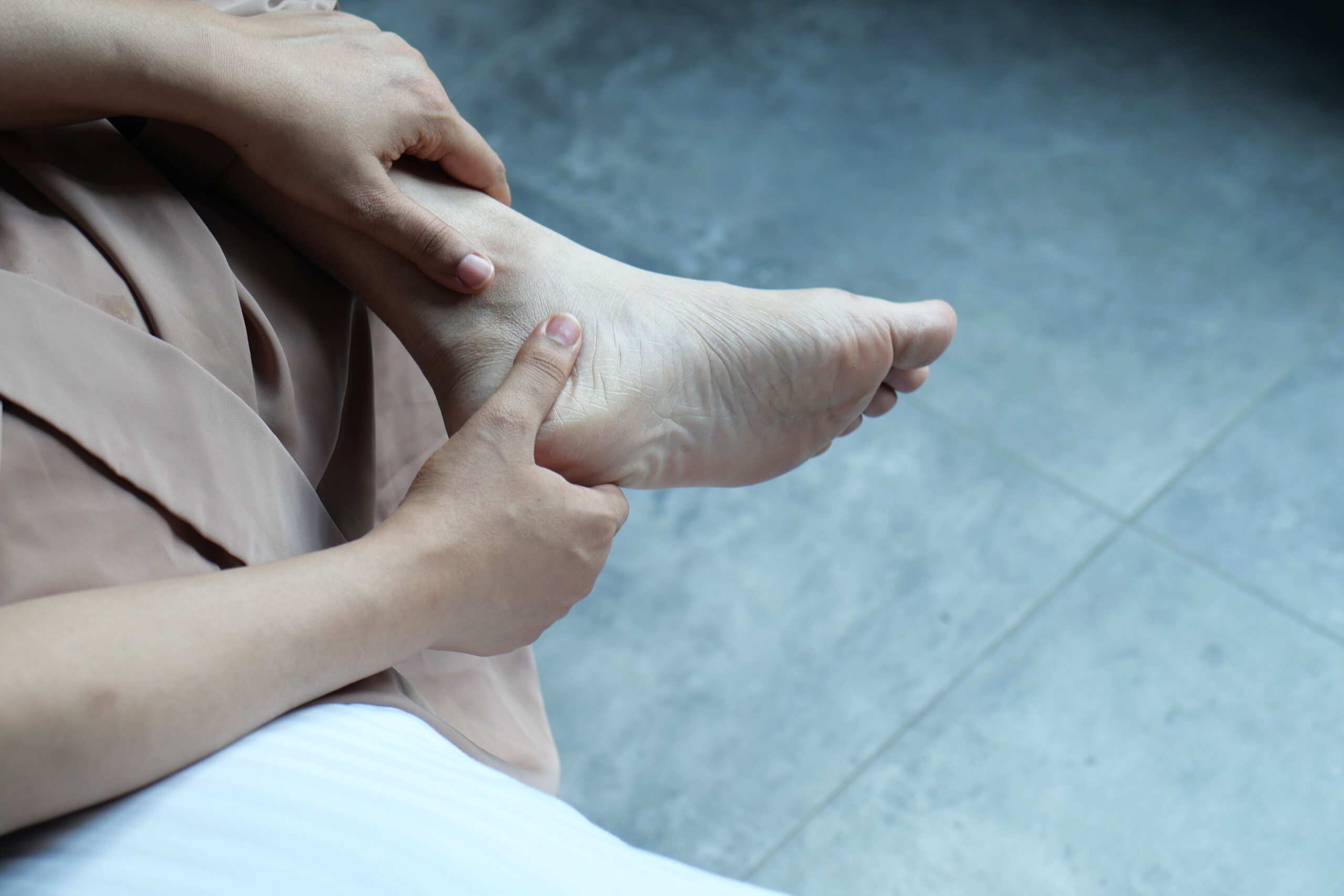
You wake up, put your feet on the floor, take your first few steps & feel a sharp or aching pain underneath your heel.
Sound familiar?
Heel pain that is worse when you first get out of bed in the morning is extremely common, particularly in people who spend a lot of time on their feet, have recently increased their exercise or running routine, or have changed their footwear.
One of the most common causes is plantar heel pain, often referred to as plantar fasciopathy. However, there are several possible reasons for heel pain, which is why getting the right diagnosis matters.
Why does my heel hurt first thing in the morning?
One of the classic features of plantar heel pain is discomfort during the first few steps after getting out of bed.
The plantar fascia is a strong band of connective tissue running along the bottom of your foot. It helps support the arch & plays an important role in how your foot absorbs & transfers load when you walk & run.
When the tissues around the heel become sensitive to load, the first few steps after a period of rest can feel particularly uncomfortable.
Interestingly, the pain is not necessarily a sign that you have “damaged” your foot. Instead, it can be related to how sensitive the tissues have become & how they respond to loading.
For many people, the pain becomes easier after they have walked around for a while, although it may return later in the day or following prolonged standing or exercise or after sitting at your work desk for a prolonged period.
Is it plantar fasciitis?
You may have heard the term plantar fasciitis, particularly if you have searched your symptoms online (we all love Dr ChatGPT!)
The term is commonly used to describe pain around the underside of the heel, but plantar heel pain is not always simply an inflammatory condition. This is one reason why physiotherapists increasingly use the term plantar fasciopathy when discussing persistent symptoms.
Typical symptoms can include:
- Pain underneath or around the inside of the heel
- Pain with the first few steps in the morning
- Discomfort after sitting or resting for a period of time
- Pain following long periods of standing or walking
- Symptoms that increase with running or jumping
- Tenderness around the heel when pressed
However, not every case of heel pain is plantar fasciopathy.
Other conditions can cause pain around the heel, so an assessment is important if your symptoms are persistent, severe or unusual.
Why have I suddenly developed heel pain?
There is often more than one contributing factor.
Heel pain can develop after a sudden increase in activity. For example, starting a new running programme, increasing your walking, joining a new gym class or spending more time standing at work.
Changes in footwear, training surfaces & bodyweight can also alter the amount of load placed through the foot.
Sometimes, however, there is no obvious trigger.
This does not mean that you have done anything wrong. The body can become sensitive when the amount of load placed on a tissue exceeds what it has currently adapted to tolerate.
Your physiotherapist can help identify what may have changed & importantly, how to gradually build your capacity again.
Should I stretch my feet & calves?
Stretching may be helpful for some people, but it is not necessarily the whole answer.
Your calf muscles, ankle movement, foot strength & overall lower-limb capacity can all play a role in how your foot manages load.
Depending on your assessment, your rehabilitation programme might include calf & foot exercises, progressive strengthening, mobility work & changes to your activity levels.
The aim is not simply to stretch the painful area until it stops hurting. It is to gradually improve the amount of load your foot can comfortably tolerate. This is something your physio can guide you through.
Should I stop exercising?
Not necessarily.
Completely stopping all activity is often unnecessary.
Instead, your physio may recommend temporarily reducing activities that significantly aggravate your symptoms while maintaining other forms of exercise.
For example, if running is causing a significant increase in pain, you may be able to continue strength training, cycling or another lower-impact activity while gradually rebuilding your running capacity.
The right approach depends on your symptoms & goals.
What about shockwave therapy?
Shockwave therapy is one treatment option that may be considered for persistent plantar heel pain.
It uses acoustic pressure waves delivered to the affected area & is often used alongside progressive strengthening & load management. You can check out our blog on shockwave therapy to understand more.
However, shockwave therapy is not automatically the best treatment simply because you have heel pain.
Your physio will first assess your symptoms to determine whether the treatment is appropriate for you. In many cases, education & progressive exercise are important parts of the rehabilitation process.
When should I see a physio?
If your heel pain has been present for several weeks, keeps returning, is getting worse or is stopping you from exercising or enjoying normal activities, it is worth having it assessed.
You physio can look at your foot and ankle movement, strength, walking & activity levels to help determine what may be contributing to your symptoms.
Your treatment plan might include education, manual therapy, exercises, activity modification, footwear advice & where appropriate treatments such as shockwave therapy.
Can heel pain go away?
Yes absolutely it can! Many people with plantar heel pain improve with appropriate management, although recovery can take time.
One of the biggest mistakes is expecting a quick fix. You may feel better after a few days of reducing activity, only for the pain to return as soon as you resume your normal routine.
Instead, rehabilitation should focus on gradually increasing your foot’s ability to tolerate the activities you want to return to.
At KUUR Rehabilitation, we look at more than just where your foot hurts. We want to understand your activity levels, lifestyle, footwear, training and goals so that we can develop a treatment plan around you.