paediatrician

Paediatric Respiratory Physiotherapy: What Is It & How Can It Help My Child?

When your baby or child has a respiratory infection, one of the things that can be most worrying for parents is seeing them struggle with mucus, coughing or breathing, so can respiratory physiotherapy help & when is it actually useful?

Paediatric respiratory physiotherapy is a specialised area of physiotherapy focused on helping babies & children with respiratory problems. The aim is to ultimately support breathing, clear secretions & help them to improve their quality of life.

What does respiratory physiotherapy do?

Babies & young children have much smaller airways than adults, so mucus & inflammation can have a greater impact on their breathing. They also cannot always blow their nose or clear secretions independently.

A paediatric respiratory physiotherapist assesses the child’s breathing pattern, respiratory effort, secretions, cough, nasal obstruction & overall clinical presentation. Depending on the findings, treatment may include nasal cleansing, secretion-clearance techniques, positioning, breathing strategies & when appropriate, respiratory devices.

When a baby develops a respiratory infection, the most common symptoms are increased mucus & inflammation of the bronchi. These two things make the bronchi narrower & make it difficult for the child to breathe properly. 

In these situations, one of the aims of respiratory physiotherapy is to help clear excessive secretions from the airways. By reducing excessive mucus in the airways, we can help improve airflow & create better conditions for inhaled medication prescribed by a doctor to reach the respiratory tract.

It is important to understand that respiratory physiotherapy does not replace medical treatment. The physiotherapist works alongside the child’s doctor, using appropriate techniques according to the baby’s age, symptoms & clinical presentation. Once excessive secretions are managed, inhaled medication may be able to reach the walls of the bronchi easily, making the medication more effective.

Nasal care is also very important. Showing the parents how to perform a proper nasal rinse is key in the daily homecare of a baby with respiratory symptoms.


How can respiratory physiotherapy benefit my child?

When treatment achieves its clinical goals, it helps the child breathe better, manage the respiratory secretions more effectively & return to their normal selves sooner.

For babies, improving nasal breathing & managing secretions can make everyday activities such as feeding & sleeping more comfortable. For older children, better respiratory management may help them return to school & to their usual activities sooner.

For children who experience recurrent or chronic respiratory conditions, physiotherapy can also provide parents with practical tools to manage symptoms at home. Learning appropriate techniques & understanding when they should be used can give families greater confidence & help them become more involved in their child’s respiratory care.

Can physiotherapy help with bronchiolitis?

Bronchiolitis is one of the most common respiratory infections affecting babies, particularly during the first two years of life. It is usually caused by a viral infection, with respiratory syncytial virus (RSV) being one of the common causes.

Most babies with mild bronchiolitis recover with supportive care at home. Respiratory physiotherapy is not routinely required for every baby with bronchiolitis.

However, in selected cases, a physiotherapist may assess your baby & provide guidance to help with secretion management, nasal obstruction & feeding difficulties. Treatment should always be adapted to the child’s clinical condition & presentation.

Respiratory physiotherapy has changed over the years. Techniques such as chest percussion (“clapping”) & postural drainage, traditionally used to clear mucus, are no longer recommended because the most current evidence does not support their use.

Modern paediatric respiratory physiotherapy is evidence-based & individualised treatments, adapting the techniques to each child’s age, symptoms & respiratory needs. 

Many children with bronchiolitis are prescribed nebulizations & inhaled medications, this is when the respiratory physiotherapist can be extremely helpful.  Removing the mucus from the bronchi may allow the medication to be more effective.

What can parents do at home?

Parents play an important role in their child’s recovery. One of the most useful things they can learn is how to perform appropriate nasal cleansing & ultimately when it is necessary.

Keeping the nose clear can be particularly helpful for babies, especially before feeding & sleeping.  Your physiotherapist can demonstrate the appropriate techniques & explain which method is suitable for your child’s age & clinical presentation.

Parents should also know how to effectively perform the nebulization & inhalation with the medicines prescribed by the doctor, during a physiotherapy session you will be taught everything you need to know.

The key message for parents

Here at Kuur Rehab our paediatric specialist respiratory physiotherapist can assess your child, identify whether physiotherapy treatment is appropriate & when necessary, teach you practical techniques such as correct nasal cleansing & secretion management strategies.

The aim is always to provide individualised, evidence-based care that supports your child’s breathing & helps your family feel more confident when managing respiratory symptoms.

“Helping clear the airways, helping children breathe better”
Ankle Instability

Ankle Instability in Sport: Why Does My Ankle Keep Giving Way?

Ankle sprains or ankle instability are one of the most common injuries in sport. Whether it happens during a rugby tackle, football match, basketball game or landing awkwardly from a jump, an ankle sprain can sometimes feel like a minor setback. The pain & swelling may settle within a few weeks, but for some athletes, the ankle never quite feels the same.  This can be seriously annoying when trying to get back into your sports!

You may notice that your ankle feels weak, unstable or as though it is going to “give way”, particularly when running, changing direction or jumping. You may even find yourself repeatedly rolling the same ankle. When these symptoms continue following an ankle sprain, it can be a sign of chronic ankle instability.

What is ankle instability?

Ankle instability commonly develops after an ankle sprain, particularly when the ligaments on the outside of the ankle have been injured. These ligaments provide important stability to the ankle, but they are only one part of the overall system.

Following an ankle injury, the ankle can also lose strength, movement, balance & coordination. Your body’s ability to sense where the ankle is positioned can also be affected. This is known as proprioception & plays an important role when reacting to changes in the ground, jumping or with a quickly change of direction.

This is important because ankle instability is not simply a feeling of weakness. Research has found a strong relationship between ankle instability & recurrent ankle sprains. This highlights why ongoing instability following an ankle injury should be addressed rather than simply accepted as part of playing sport.  

Why does my ankle keep giving way?

Honestly, there is usually more than one factor involved.

One common issue is reduced strength around the ankle & lower leg. The calf & smaller muscles around the ankle help control the foot every time you run, land or change direction. After an injury, these muscles may not be working at the same level as they were before.

Balance & proprioception can also be affected.  Your nervous system constantly receives information from your foot & ankle to help your body react to changes in position.  After an ankle sprain, this system can become less effective. Although this may not be noticeable during normal walking it can become obvious when an athlete needs to react quickly during their normal sporting activities.

Ankle mobility can also play a role. If the ankle has become stiff following an injury, it can change the way you squat, run, jump & absorb force. A physiotherapy assessment can identify whether a restriction in ankle movement is contributing to these problems.

It is also important to look beyond the ankle itself.  The hip, knee & foot all contribute to how the lower limb controls movement, particularly during single-leg activities, like single leg squats or Bulgarian split squats.  

How is ankle instability assessed?

A thorough physiotherapy assessment should look at much more than simply where the ankle hurts.

Your physiotherapist may assess ankle movement & ligament stability, as well as the strength of the calf & surrounding muscles. Balance, single-leg control & proprioception are also important, particularly for athletes involved in running & jumping sports.

As rehabilitation progresses, assessment should become more specific to the athlete’s sport. A rugby player, for example, needs to accelerate, decelerate, change direction as well as tolerate contact, while a basketball or netball player may need to repeatedly jump, land and change direction.

How is ankle instability treated?

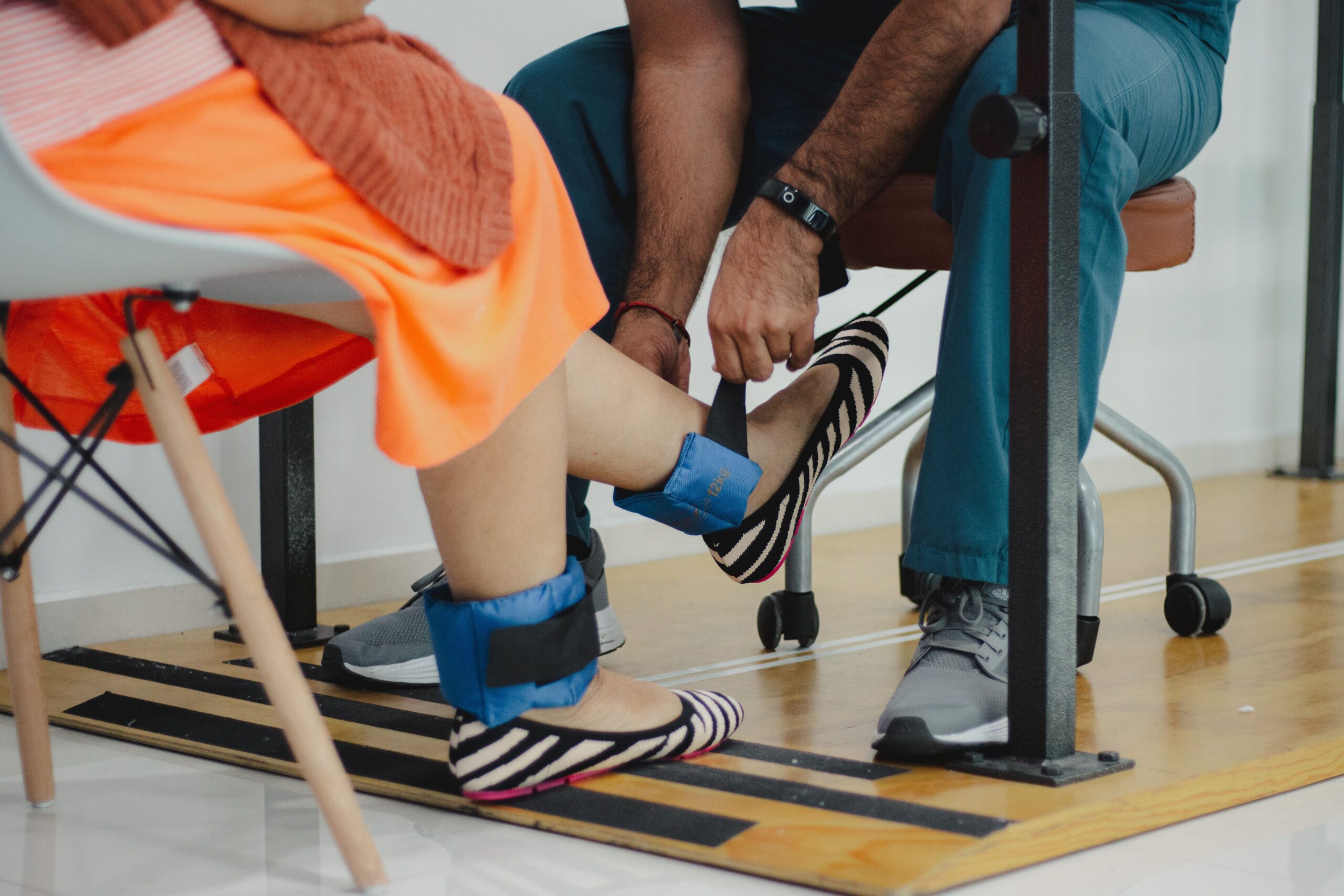
Rehabilitation depends on what is contributing to the instability. Early treatment may focus on restoring ankle movement & gradually rebuilding strength through exercises such as calf raises, resisted ankle exercises & progressive single-leg strengthening. Doesn’t everyone love a single leg squat!

There is good clinical-evidence supporting exercise-based rehabilitation following ankle sprains. 

This is why rehabilitation should not simply focus on treating the ankle joint. Strength, balance, proprioception & functional movement all need to be progressively challenged.

What about hands-on treatment?

Hands-on treatment can be useful as part of a broader rehabilitation programme, particularly when an athlete has restricted ankle movement.

Research has found that manual mobilisation can produce short-term improvements in ankle dorsiflexion following ankle sprain. However, hands-on treatment works best when combined with active rehabilitation rather than being used as the sole treatment.  

In practice, this might involve joint mobilisation to improve movement alongside strengthening, balance & sport-specific exercises.

What about ankle taping or braces?

Taping or an ankle brace can provide additional support, particularly when returning to sport following an ankle sprain. Some athletes also find that external support improves their confidence.  (You can check out our Blog on Kinesio-tape to fully understand is uses and benefits!)

Evidence also supports the use of bracing as part of ankle sprain prevention, with systematic-review evidence finding strong support for bracing & moderate evidence for neuromuscular training in reducing recurrence.  

However, a brace should not replace your rehab. Think of it as an additional layer of support while you rebuild the physical qualities needed to cope with your sport.

When are you ready to return to sport?

One of the biggest mistakes following an ankle sprain is using pain as the only measure of recovery.

Being able to walk without pain does not necessarily mean your ankle is ready to sprint, jump & change direction at full speed.

A return to sport should consider whether the ankle can tolerate the demands you are going to place on it. Strength, balance, movement quality, hopping, jumping, change of direction & confidence should all be considered.

If your ankle continues to give way or you have repeatedly injured the same ankle, it is worth having it properly assessed. 

Here at Kuur Rehab our goal is not simply to get you through your next training session, but to rebuild the strength, control & confidence needed to keep you performing & ultimately reduce the risk of another injury!

Evidence behind this article

  • Smith MD, et al. Return to sport decisions after an acute lateral ankle sprain injury: introducing the PAASS framework. British Journal of Sports Medicine, 2021.  
  • Doherty C, et al. Exercise-based rehabilitation reduces reinjury following acute lateral ankle sprain: a systematic review update with meta-analysis. British Journal of Sports Medicine, 2022.  
  • Xu JS, et al. Exercise Therapy for Chronic Ankle Instability: Which Modality for Which Deficit? Journal of Foot and Ankle Research, 2026.  
  • Effectiveness of exercise therapy on chronic ankle instability: a meta-analysis, 2025.  
  • Ankle instability as a prognostic factor associated with the recurrence of ankle sprain: a systematic review, 2023.  


Shockwave Therapy

Shockwave Therapy: What You Need to Know

If you have been dealing with a stubborn tendon or muscle problem that just doesn’t seem to be getting any better, you may have heard your physiotherapist mention shockwave therapy.

It is a type of treatment that has become increasingly popular in physiotherapy & musculoskeletal rehabilitation, particularly for persistent tendon problems. Despite the name, shockwave therapy does not involve electrical shocks & it is not as intimidating as it sounds.

So, what exactly is shockwave therapy, what does it treat & does it actually work?  Here’s all the answers to your questions:

What is shockwave therapy?

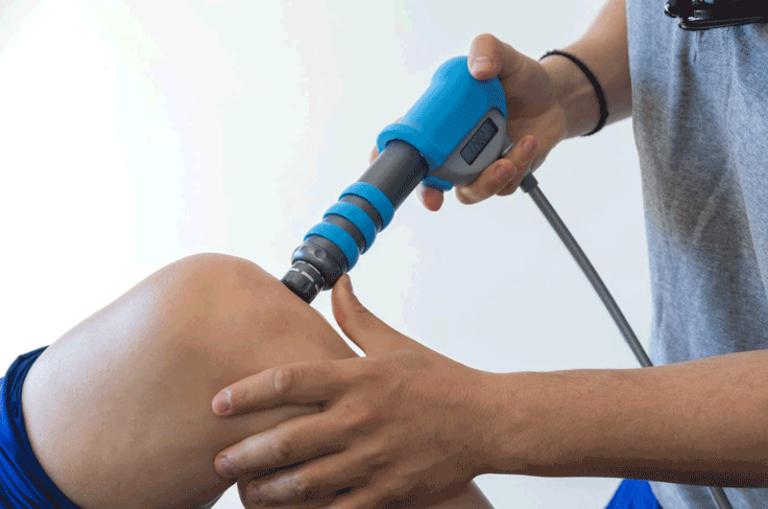
Shockwave therapy, also known as extracorporeal shockwave therapy (ESWT), uses acoustic pressure waves that are delivered to a specific area of the body through a handheld treatment device.

The physiotherapist applies a gel to the skin before moving the applicator over the affected / sore area. The treatment delivers mechanical energy into the underlying tissues.

Rather than simply trying to eliminate the pain, shockwave therapy is generally used as part of a broader rehabilitation programme. It may help stimulate biological processes within the treated tissues & can be particularly useful when pain has become persistent.

It is important to state however, shockwave therapy is not suitable for every injury or every person. A thorough assessment should always come first to determine whether it is appropriate for you and your particular issue.

Does shockwave therapy hurt?

This is probably the first question patients ask before their first session.

The honest answer is: it can be uncomfortable, but it should be tolerable.

You may feel a tapping, pulsing or sharp sensation as the shockwaves are delivered to the affected area. Some areas of the body can be more sensitive than others, particularly when treating an already painful tendon for example.

Your physiotherapist can adjust the intensity according to your symptoms & tolerance. The aim is not to make the treatment as painful as possible, higher intensity does not automatically mean better results.

The treatment itself only lasts a few minutes & you can have multiple breaks throughout, making the temporary discomfort manageable.

What conditions can shockwave therapy help?

Shockwave therapy is commonly used for a number of persistent musculoskeletal conditions, particularly some tendon-related problems.

Depending on your assessment, it may be considered for conditions such as:

  • Plantar fasciopathy & persistent heel pain
  • Achilles tendinopathy
  • Tennis or golfer’s elbow
  • Patellar tendon problems
  • Some forms of shoulder tendinopathy
  • Certain chronic muscle & tendon injuries
  • Some cases of calcific shoulder tendinopathy

It is important to understand that not every case of these conditions requires shockwave therapy. The cause, duration & severity of your symptoms, along with your overall health & activity levels, all influence the most appropriate treatment.

How many sessions will I need?

There is no universal number of shockwave sessions that works for everyone.

Treatment sessions commonly involve a number of sessions spaced over several weeks, rather than having treatment every day, this is not advised.  Your physiotherapist will determine the appropriate frequency & dosage based on your condition & response.

Another important point to note is that improvement may not be immediate.

Some people notice changes relatively quickly, while others experience gradual improvement over the following weeks. Tendons & other connective tissues can take time to adapt, so shockwave therapy should generally be viewed as one part of a longer rehabilitation process rather than a quick fix treatment.

What should I do after shockwave therapy?

Your physiotherapist may recommend temporarily modifying certain activities following treatment.

It is also important to continue with the rehabilitation exercises prescribed for you by your physiotherapist.  For many tendon problems, progressive strengthening is a key part of recovery.  Shockwave therapy should complement rather than replace your rehab programme.

This is one of the biggest misconceptions about shockwave therapy: the machine unfortunately is not doing all the work for you.

The best results come from combining appropriate treatment with progressive rehabilitation, load management & changes to the factors that may have contributed to the problem in the first place.

Are there any side effects?

Some temporary redness, tenderness, swelling or bruising can occur following treatment. These effects generally settle relatively quickly.

Your physiotherapist should also take your medical history into consideration before treatment. There are circumstances where shockwave therapy may not be appropriate, so a proper assessment & screening process is important.

Is shockwave therapy better than physiotherapy?

This is another question we hear regularly & it is not really an either / or decision.

Shockwave therapy is a physiotherapy treatment tool.

Shockwave therapy may be one useful component of your individualised programme, alongside hands-on treatment, education, mobility work & progressive strengthening.

Is shockwave therapy right for you?

If you have been struggling with persistent tendon or musculoskeletal pain, shockwave therapy may be worth discussing with your physiotherapist.

At KUUR Rehabilitation, we do not use shockwave therapy simply because a patient has a particular diagnosis. We first assess the individual, understand their symptoms & goals.  Only then do we determine whether shockwave therapy is an appropriate part of rehabilitation.

The aim is not to provide a temporary reduction in pain. It is to help you understand your injury, improve your capacity & ultimately return to the activities you enjoy.