
Shockwave Therapy: What You Need to Know
If you have been dealing with a stubborn tendon or muscle problem that just doesn’t seem to be getting any better, you may have heard your physiotherapist mention shockwave therapy.
It is a type of treatment that has become increasingly popular in physiotherapy & musculoskeletal rehabilitation, particularly for persistent tendon problems. Despite the name, shockwave therapy does not involve electrical shocks & it is not as intimidating as it sounds.
So, what exactly is shockwave therapy, what does it treat & does it actually work? Here’s all the answers to your questions:
What is shockwave therapy?
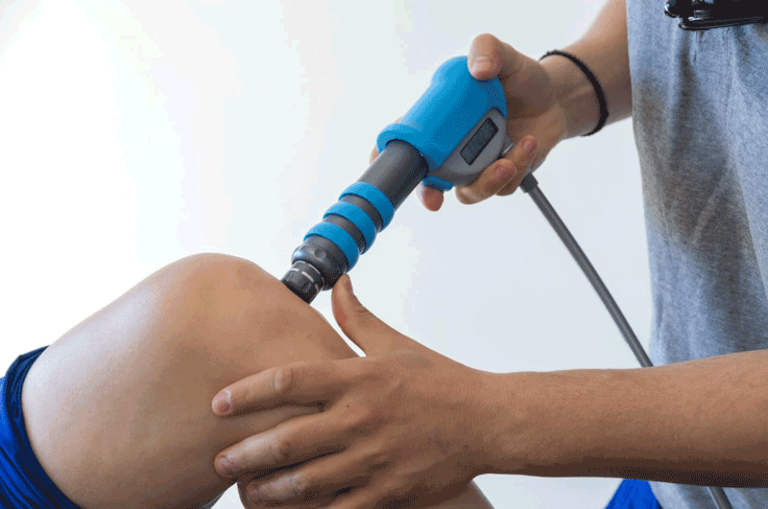
Shockwave therapy, also known as extracorporeal shockwave therapy (ESWT), uses acoustic pressure waves that are delivered to a specific area of the body through a handheld treatment device.
The physiotherapist applies a gel to the skin before moving the applicator over the affected / sore area. The treatment delivers mechanical energy into the underlying tissues.
Rather than simply trying to eliminate the pain, shockwave therapy is generally used as part of a broader rehabilitation programme. It may help stimulate biological processes within the treated tissues & can be particularly useful when pain has become persistent.
It is important to state however, shockwave therapy is not suitable for every injury or every person. A thorough assessment should always come first to determine whether it is appropriate for you and your particular issue.
Does shockwave therapy hurt?
This is probably the first question patients ask before their first session.
The honest answer is: it can be uncomfortable, but it should be tolerable.
You may feel a tapping, pulsing or sharp sensation as the shockwaves are delivered to the affected area. Some areas of the body can be more sensitive than others, particularly when treating an already painful tendon for example.
Your physiotherapist can adjust the intensity according to your symptoms & tolerance. The aim is not to make the treatment as painful as possible, higher intensity does not automatically mean better results.
The treatment itself only lasts a few minutes & you can have multiple breaks throughout, making the temporary discomfort manageable.
What conditions can shockwave therapy help?
Shockwave therapy is commonly used for a number of persistent musculoskeletal conditions, particularly some tendon-related problems.
Depending on your assessment, it may be considered for conditions such as:
- Plantar fasciopathy & persistent heel pain
- Achilles tendinopathy
- Tennis or golfer’s elbow
- Patellar tendon problems
- Some forms of shoulder tendinopathy
- Certain chronic muscle & tendon injuries
- Some cases of calcific shoulder tendinopathy
It is important to understand that not every case of these conditions requires shockwave therapy. The cause, duration & severity of your symptoms, along with your overall health & activity levels, all influence the most appropriate treatment.
How many sessions will I need?
There is no universal number of shockwave sessions that works for everyone.
Treatment sessions commonly involve a number of sessions spaced over several weeks, rather than having treatment every day, this is not advised. Your physiotherapist will determine the appropriate frequency & dosage based on your condition & response.
Another important point to note is that improvement may not be immediate.
Some people notice changes relatively quickly, while others experience gradual improvement over the following weeks. Tendons & other connective tissues can take time to adapt, so shockwave therapy should generally be viewed as one part of a longer rehabilitation process rather than a quick fix treatment.
What should I do after shockwave therapy?
Your physiotherapist may recommend temporarily modifying certain activities following treatment.
It is also important to continue with the rehabilitation exercises prescribed for you by your physiotherapist. For many tendon problems, progressive strengthening is a key part of recovery. Shockwave therapy should complement rather than replace your rehab programme.
This is one of the biggest misconceptions about shockwave therapy: the machine unfortunately is not doing all the work for you.
The best results come from combining appropriate treatment with progressive rehabilitation, load management & changes to the factors that may have contributed to the problem in the first place.
Are there any side effects?
Some temporary redness, tenderness, swelling or bruising can occur following treatment. These effects generally settle relatively quickly.
Your physiotherapist should also take your medical history into consideration before treatment. There are circumstances where shockwave therapy may not be appropriate, so a proper assessment & screening process is important.
Is shockwave therapy better than physiotherapy?
This is another question we hear regularly & it is not really an either / or decision.
Shockwave therapy is a physiotherapy treatment tool.
Shockwave therapy may be one useful component of your individualised programme, alongside hands-on treatment, education, mobility work & progressive strengthening.
Is shockwave therapy right for you?
If you have been struggling with persistent tendon or musculoskeletal pain, shockwave therapy may be worth discussing with your physiotherapist.
At KUUR Rehabilitation, we do not use shockwave therapy simply because a patient has a particular diagnosis. We first assess the individual, understand their symptoms & goals. Only then do we determine whether shockwave therapy is an appropriate part of rehabilitation.
The aim is not to provide a temporary reduction in pain. It is to help you understand your injury, improve your capacity & ultimately return to the activities you enjoy.